Bar Straightness and Other Things to Consider for High RPMs
To optimize CNC lathe RPM in bar-fed applications, bar stock should not exceed 0.007″ TIR (Total Indicator Runout — the total deviation measured as the bar rotates, indicating how straight or bent it is) per foot, measured at three equidistant points over the full bar length. For a 12-foot bar, that means runout at any single measurement point should not exceed 0.028″. Bars that exceed this threshold introduce vibration into the guide channel, which forces operators to reduce spindle RPM to compensate — directly limiting throughput and surface finish quality.
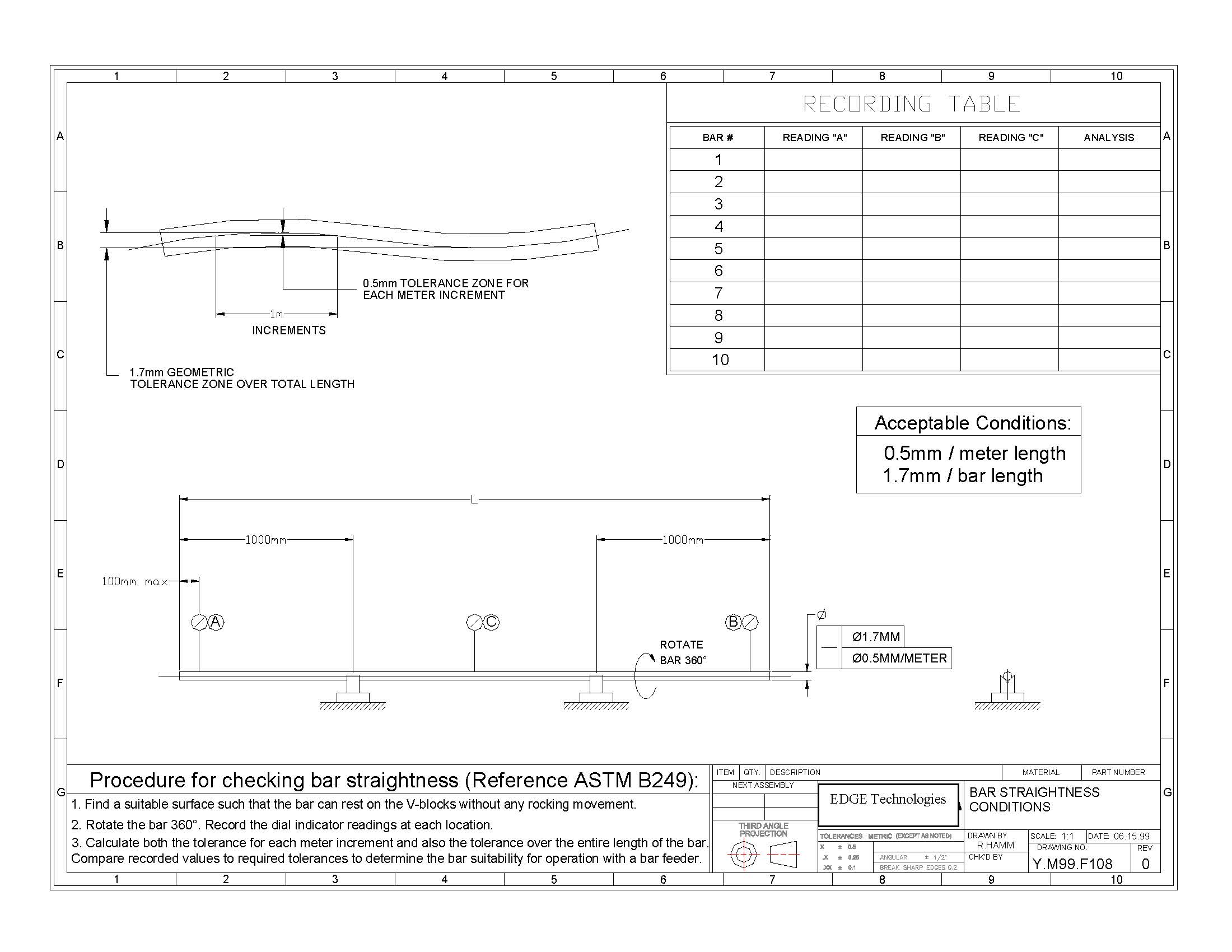
Here’s the inspection procedure for bar straightness:
- Place bar stock on three V-blocks spaced equidistance apart. For a 12′ bar, v-blocks would be placed 3′ (~1,000mm) from the ends and at the midpoint.
- Using a dial indicator, rotate the bar by hand 360 degrees measuring total runout at all three v-blocks.
- Runout should not exceed 0.028” at any v-block.
You can use this helpful diagram on your shop floor:
Bar straightness matters because an out-of-straight bar creates an eccentric rotating mass inside the guide channel — the greater the runout, the more the bar wants to whip, and the lower the RPM must be set to keep vibration within acceptable limits.
6 Ways Bar Stock Can Lose Straightness
Straightness is perishable in bars, and it is often lost during handling, loading, and unloading. That matters because straightness is critical for holding position and tolerances on highly engineered medical, aerospace, automotive, and electronic parts.
Here are six ways that bars can lose their straightness.
1) Mechanical damage to an end. If the bundle is struck by a lift truck, or if the bars catch on a rack or table while being hoisted with the crane, the ends of the caught bars can be deflected out of the bundle and bent.
2) Improper blocking and support at the mill or on the truck. Cold finished bar stock, especially in smaller diameters, needs to be supported at multiple points along its length. This reduces the radius that the bundle can sag or droop between supports. Reputable mills put more bands on smaller-ID bar bundles to preserve straightness when needed.
3) Truck loading and securing. The binders used to secure the bars onto the truck can cause permanent deformation if they are not matched up with the blocking beneath the bars. Some truckers use “cheater bars” – a 4’ piece of pipe – to secure the binding chains “one more notch.” You can hear the wood underneath the bundle being crushed. Chains are always bad news for cold drawn bars: nicks, gouges, and “low spots.”
4) Improper unloading. Use a spreader bar, so that the bundle has multiple points of support, especially with smaller-diameter bars and small bundles. We’ve seen shops unload bundles using a single “hitch” at the approximate middle of the bundle. This causes a permanent camber over the length of the bars. Jerky crane lifts, rather than smooth movements, can magnify the effect.
5) Hand unloading or using a forklift. Small-diameter bars especially can be bent by the way they are manually pulled out, lifted, and carried, instead of being placed on a table or rack. Using a forklift can also cause bars to be bent.
6) Frequency of handling. If you are buying from a service center, the number of times the material has been handled can double or triple compared to a direct shipment from the mill. Because you may be buying non-bundle quantities, the number of lifts and handling operations increases dramatically with the additional destination of the service center, as well as in splitting the bundle.
When you encounter bar straightness issues, characterizing the way the bar deviates from straightness can help you determine which of the above factors might be the cause.
Other Considerations to Maximize CNC lathe RPM:
Saw-cut ends are generally preferred over sheared bar ends, as sheared ends can create a kink or bend at one end of the bar length when the shear becomes dull. The end sections of the bar stock are more likely to cause vibration issues.
Guide channel size has a direct and measurable impact on achievable RPM. A channel that is too large relative to the bar diameter allows the bar to whip — flexing and oscillating as it spins — which generates vibration and forces RPM reduction. A channel that is too tight prevents the oil film from forming properly, increasing friction and wear. Selecting the correct channel size for your bar diameter range, and confirming the changeover point between channel sets, is one of the highest-leverage adjustments available for RPM optimization.
Use the recommended oil viscosity for your bar feeder model. This makes a difference in stabilizing the rotating bar in the guide channel set and achieving the hydrodynamic effect.
Use recommended oil pressure settings. Too much pressure with small-diameter bars can cause vibration. Too little pressure on bigger diameter bars diminishes vibration dampening.
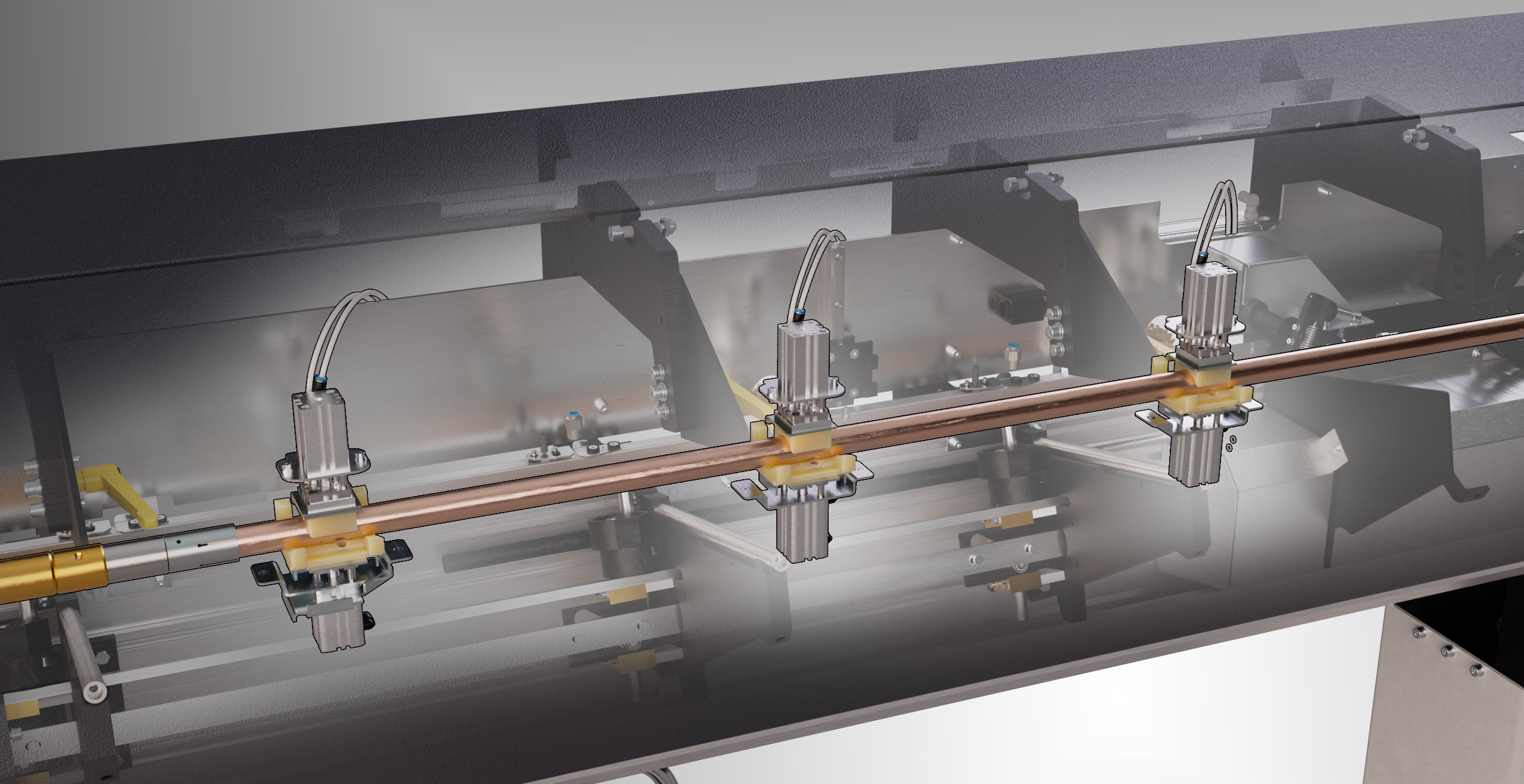
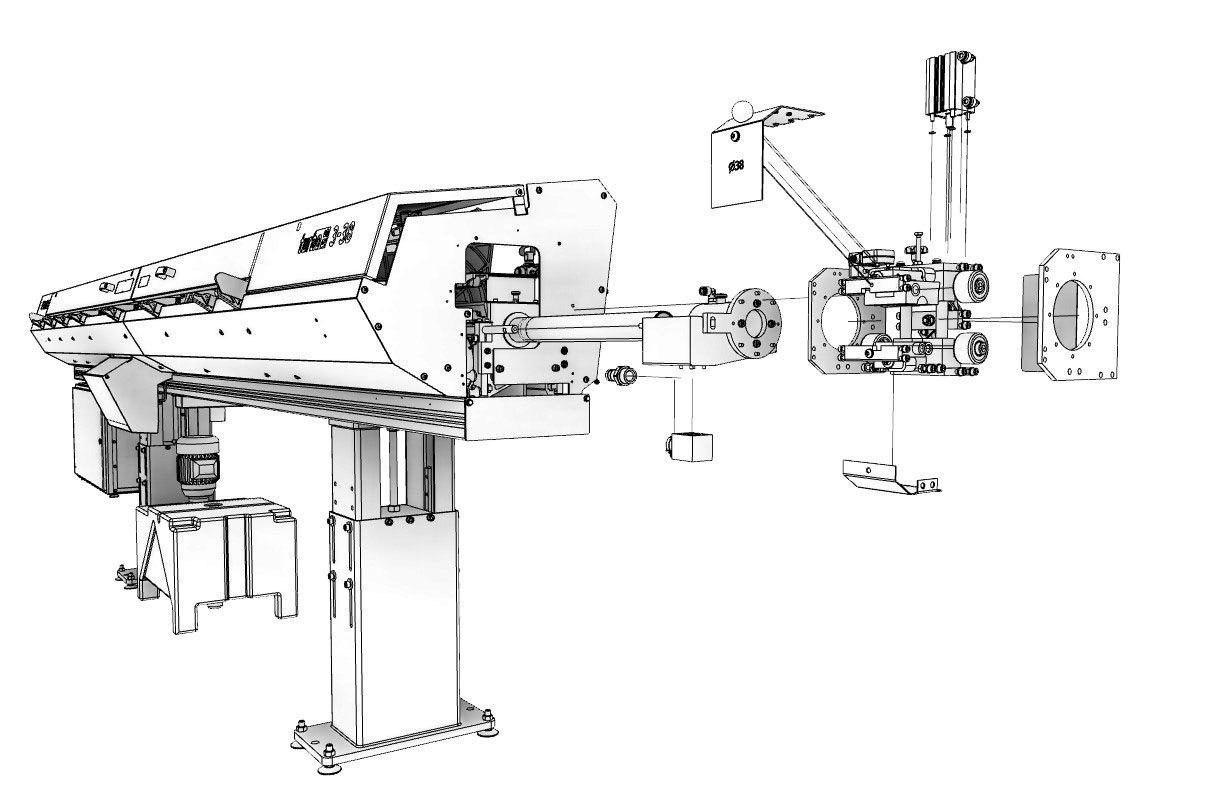
Supporting the bar at the transition zone between the bar feeder and lathe spindle is critical for high-RPM stability. A roller steady rest (a set of adjustable rollers that cradle the bar as it exits the bar feeder and enters the spindle) reduces whip in the unsupported gap. A bearing block and telescopic nose insert — components that guide the bar through the final inches before the spindle — must be correctly sized to the bar diameter to prevent the bar from deflecting at the point where it is most vulnerable. Mismatched or worn components in this zone are a common and frequently overlooked cause of RPM limitation.
Part program sequencing can be adjusted to reduce harmonic vibration — the resonant oscillation that occurs when a rotating bar’s natural frequency aligns with the spindle speed. In practice, this often means programming brief RPM ramps (gradual speed increases rather than jumping directly to target RPM) or adjusting dwell times between operations to avoid sustained rotation at speeds known to excite the bar’s resonant frequency. If vibration appears at specific RPM bands but disappears above or below them, harmonics are the likely cause.
Ensure that chuck pressure is set correctly.
Use this checklist below for the best possible performance, or reach out to edgehelp@edgetechnologies.com to schedule a preventative maintenance review: